Deep tissue vs Thai vs hot stone — which massage for which pain?
Stop defaulting to whatever the menu lists first. Match the treatment to the ache you actually walked in with.
Stop defaulting to whatever the menu lists first. Match the treatment to the ache you actually walked in with.
Three people walk into a spa in An Thuong: one with a stiff neck from a 12-hour flight, one who wants to switch off completely, and one whose lower back has had enough of café chairs. They should not all book the same massage — but on a typical menu, they often do. Here's how to choose well.
Most good spas — Mo Ran included — blend techniques, so you can also ask for, say, deep tissue with a hot-stone warm-up. But it helps to understand each on its own first.
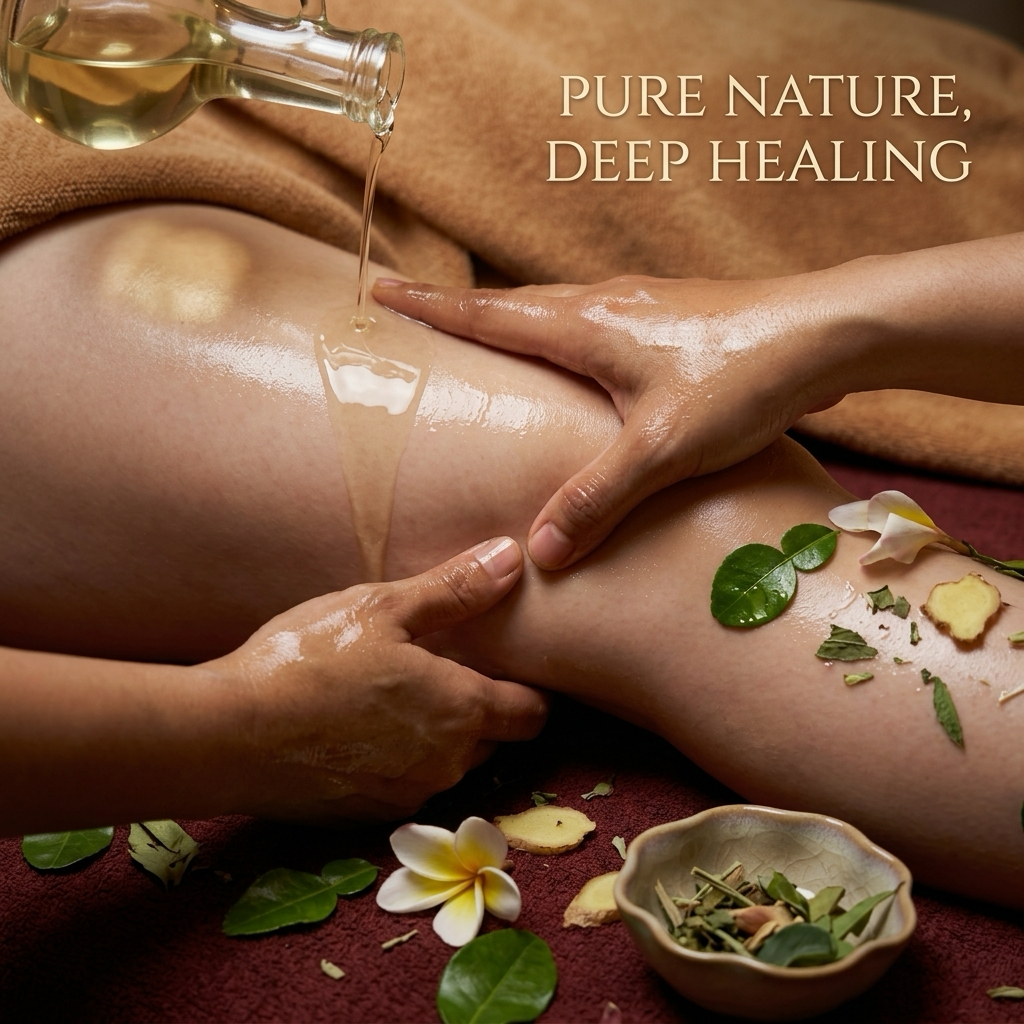
Deep tissue uses firm, slow, targeted pressure to reach the deeper layers of muscle and release the tight bands we call knots. It's the right call for shoulder, neck, back, hip and leg tension — exactly the places that seize up after flights, long bus rides, or days hunched over a laptop. It can feel intense in the moment, but it should read as productive release, never sharp pain. Say “stronger” or “lighter” freely; a skilled therapist adjusts instantly.
If you're tall or carry larger muscle, ask specifically for strong or deep-tissue pressure. Good An Thuong therapists are used to adjusting force for international guests — Mo Ran trains for it.
Traditional Thai massage combines pressure with assisted stretching — the therapist gently moves your limbs through positions to open up tight hips, hamstrings and shoulders. It's done on a mat, usually in loose clothing, with little or no oil. Choose it when you feel stiff more than knotted, or when you want to leave feeling longer and looser. It can be vigorous; as always, speak up if anything is too much.
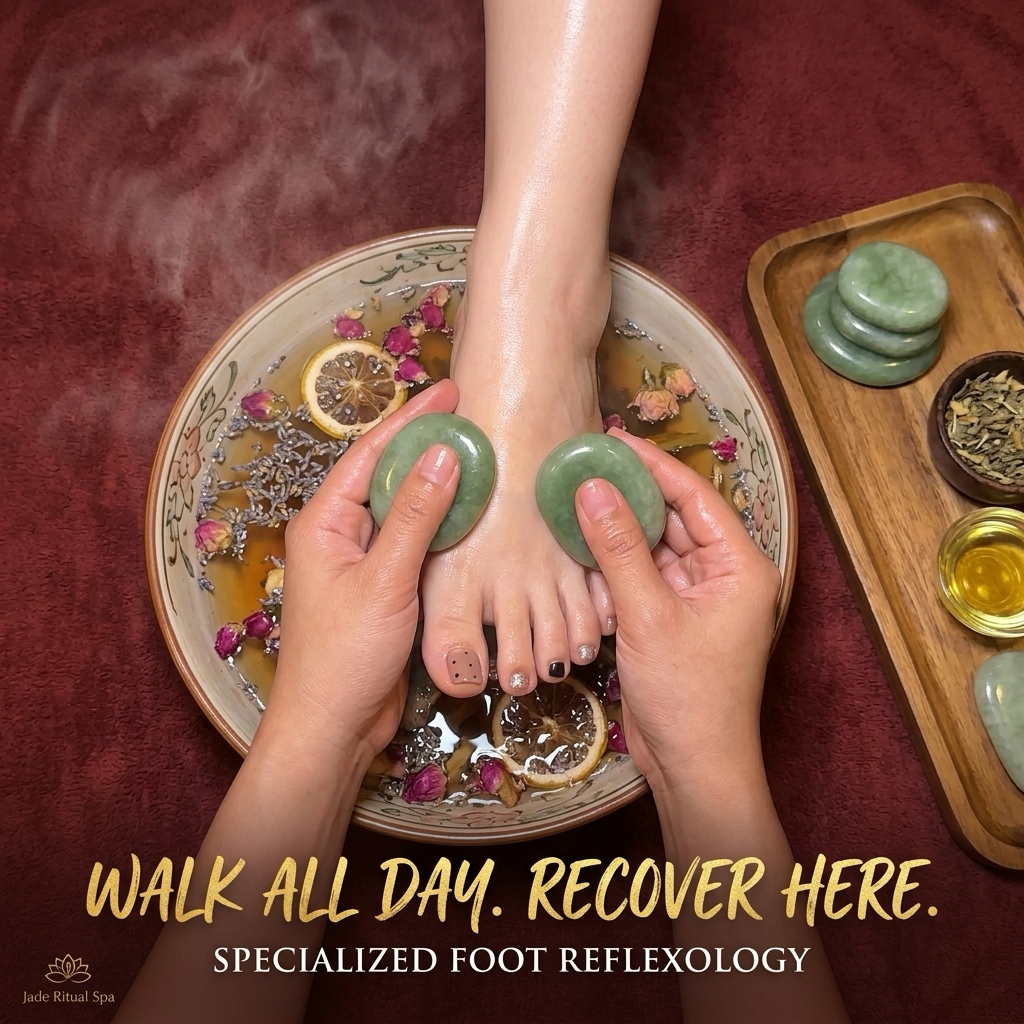
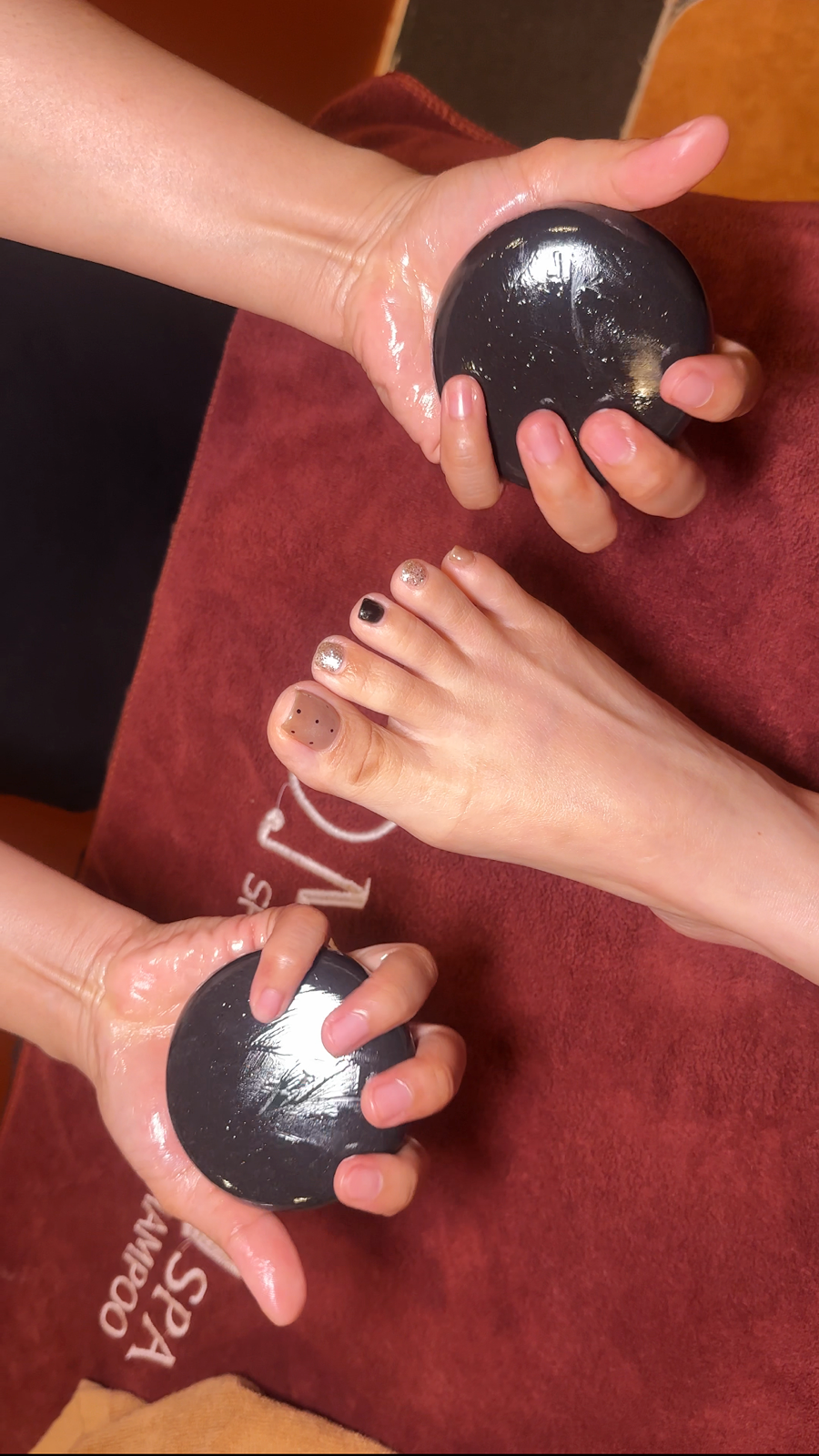
Hot stone therapy uses smooth heated stones to warm the muscle before and during the massage. The heat does part of the work, so the same depth is reached with less force — which makes it both deeply relaxing and surprisingly effective. It's the most forgiving option for first-timers, anyone who finds deep tissue too strong, or a cold, over-air-conditioned traveller who simply wants to thaw out.
| Type | Pressure | Feel | Best for |
|---|---|---|---|
| Deep tissue | Firm, targeted | Intense, releasing | Knots, back & shoulder tension, travel fatigue |
| Thai-style | Firm + stretch | Active, opening | Stiffness, mobility, tight hips & hamstrings |
| Hot stone | Gentle–medium | Warm, soothing | Stress, first-timers, cold muscles |
New to spas in the neighbourhood? Our complete guide to massage & spa in An Thuong covers oil, pricing and etiquette too. And if you care about what's on your skin, read what “100% organic oil” really means.
Message us your main issue — neck, lower back, legs, jet lag — and we'll match the right treatment and duration.
Ask on WhatsApp See the menuDeep tissue is best for specific knots in the back, shoulders and neck. It uses firm, slow, targeted pressure to release tight muscle — ideal after long flights or laptop days.
Thai massage can feel intense because it combines pressure with assisted stretching, but it should never be sharply painful. Tell your therapist if anything is too strong — good pressure feels like productive release, not pain.
Yes. Hot stone is one of the gentlest, most relaxing options. The heat softens muscle so less force is needed, making it a comfortable introduction to bodywork.